Posted on

Introducing the Apollo 8 Dynamic Air Mattress for Very High Risk Users

The Apollo 8 dynamic air replacement mattress gives reliable pressure care for people at very high risk. It replaces a standard mattress and uses moving air cells to reduce pressure and help protect the skin. The design keeps care teams safe and makes daily use simple.

What the Apollo 8 mattress is and who it helps

The Apollo 8 helps people who are bedbound or who have limited movement. It helps people who face a high risk of pressure sores and those who already have tissue damage. The mattress also suits larger users because it supports up to 30 stone.

Female patient in a hospital bed surrounded by her family
Female patient in a hospital bed with a nurse stood next to her.

How the dynamic therapy works to protect skin integrity

The mattress fills the figure of eight cells in a 12 minute cycle. Cells inflate and deflate in sequence so pressure moves across the body. This lowers interface pressures and gently stimulates capillaries. The routine movement improves circulation and helps protect skin health. You can also adjust the mattress to match a person body shape and position.

Designed for very high risk pressure care

The system uses 17 figure of eight alternating cells plus three static head cells. It has a single set of alternating cells and adjustable weight settings. The mattress offers a static mode for stable transfers. Quick CPR deflation lets staff respond in an emergency. Audible and visual alarms help staff to spot problems fast.

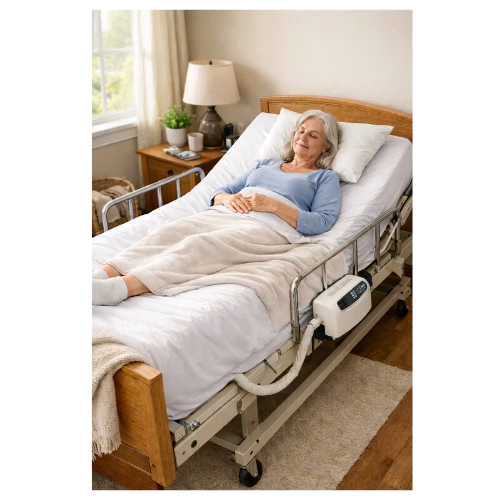
A female patient led in a hospital bed at home resting.
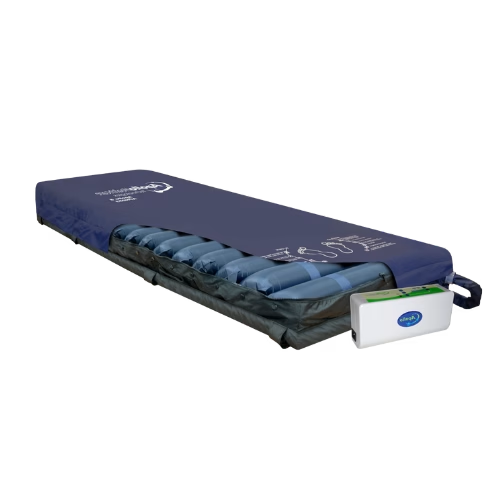
Apollo 8 Dynamic Air Replacement Mattress

Hygiene, infection control and clinical safety

The cover is multi stretch polyurethane. It is waterproof and vapour permeable so it manages humidity and reduces friction. You can wipe the cover clean or remove it for laundering at 90 degrees to meet hygiene standards. The seams are high frequency welded to reduce fluid ingress. The system resists common bacteria and viruses and shows proven resistance to MRSA.

Practical features that make daily care easier

The pump runs quietly and uses power efficiently. It has clear and simple controls so staff need little training. External air filters make routine maintenance easier. A 12 hour backup keeps the mattress inflated during power loss or patient moves.


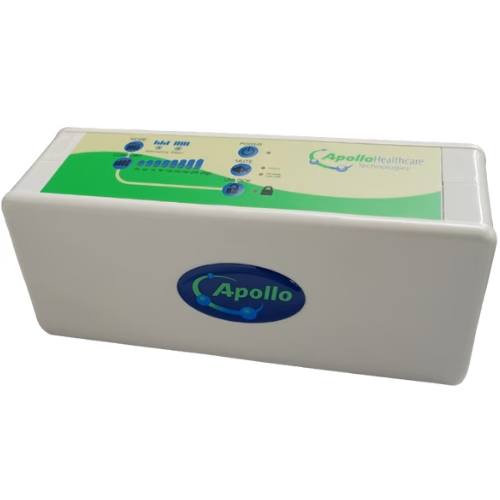
Apollo 8 pump
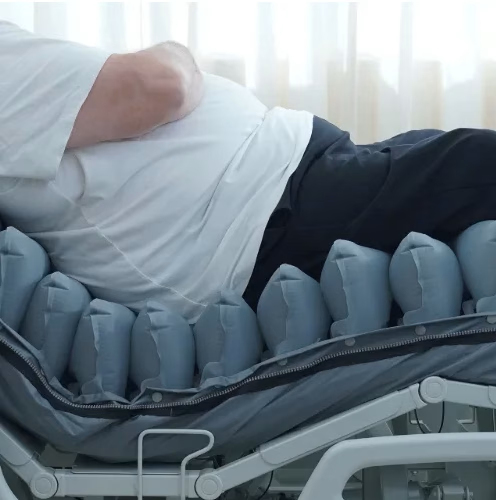
Side view of a man led on an Apollo 8 Mattress

Comfort and pressure redistribution

The figure of eight cells create a larger contact area and spread pressure more evenly. The alternating action offers gentle movement that supports comfort and skin protection. Manual tuning lets carers set the mattress for each user posture and need.

Where Apollo 8 is suitable for use

Use Apollo 8 in hospitals, care homes and at home. It fits a wide range of profiling beds so it works with most clinical setups. The battery backup and simple controls make it practical for many care settings.

Patient led in a hospital bed with a visitor clasping their outstretched hand

A male patient in a hospital bed with a female doctor holding his hand.

Who benefits most from this mattress

This mattress benefits people who are fully or largely bedbound, users with very limited mobility, and those at high risk of pressure ulcer development. It is also an excellent choice for patients who already have pressure damage, because the alternating therapy and humidity management support both prevention and healing goals. Care teams who need an easy to use, clinically robust mattress with strong infection control credentials will also find Apollo 8 a reliable solution.

Why choose the Apollo 8 dynamic air replacement mattress

Choose Apollo 8 for proven alternating therapy, strong infection control and easy daily use. It supports larger users and helps both prevent and treat pressure damage. The simple pump and clear controls reduce training time and help teams deliver consistent care.

Contact us today to learn more about the Apollo 8 dynamic air replacement mattress.

Two nurses with one holding a clipboard that they are both looking at.
Posted on

Parkinson’s Mobility Equipment Explained: What You Need to Know

Living with Parkinson’s can make movement slower, unsteady, or tiring. That’s why the right mobility aids for Parkinson’s matter. They can help with safety, comfort, and independence. In this guide we’ll explain common types of equipment — from walkers and wheelchairs to bathroom aids and hoists, in simple, practical terms. For further guidance and trusted advice, the Parkinson’s UK website is a great place to start.

Why mobility equipment helps with Parkinson’s

Parkinson’s affects people in different ways. For example, stiffness, balance changes and slower movement can make walking harder. Therefore, simple tools can reduce falls and make daily tasks easier. Also, using the right aid can mean less strain for carers and more confidence for the person using it.


Walking aids: sticks, frames and rollators

First, consider basic walking aids. A stick or cane can help with a little extra balance. Next, a walking frame gives more support and stability. Meanwhile, rollators (walkers with wheels and a seat) are great if you need a place to rest while moving. Importantly, an occupational therapist can advise which one suits you best.


Manual wheelchairs and attendant-propelled chairs

If walking is difficult or tiring, a manual wheelchair might help. They come in lightweight and robust designs. Also, attendant-propelled options let a carer push when needed. These chairs improve mobility indoors and out, and they can be compact for transport.


Powerchairs and mobility scooters

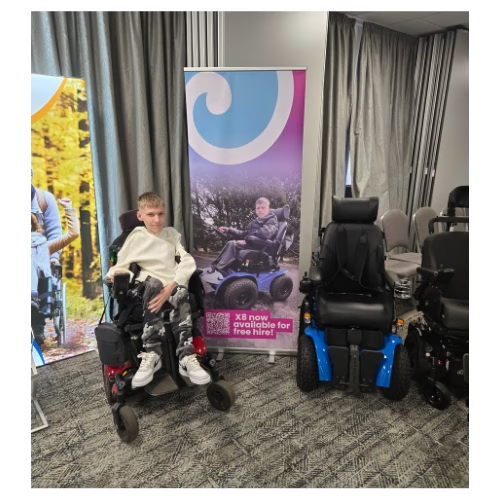
For longer distances or reduced stamina, powerchairs and mobility scooters are a common solution. They allow independent movement without pushing. However, choose carefully: think about turning space, home door widths, and transport needs. Also, try before you buy or hire.


Hoists, transfer aids and stair solutions

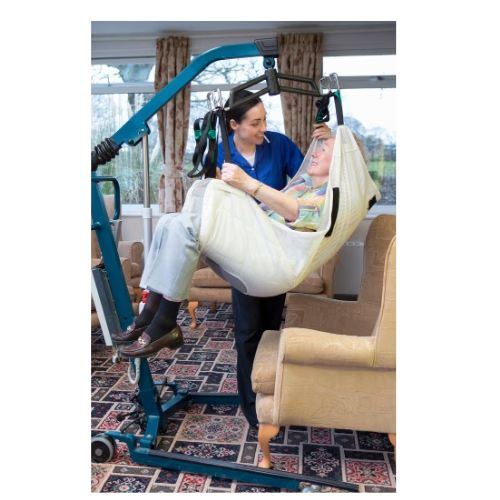
Where transfers are challenging, hoists and slings provide safer movement between bed, chair and bath. Stairlifts or through-floor lifts may be right for houses with multiple floors. These adaptations often require a professional assessment and installation.

                                                                   Bathroom and toileting aids

Bathrooms can be risky places. Therefore, look at grab rails, raised toilet seats, shower chairs and bath or shower transfer benches. In addition, removable bath lifts and non-slip mats help keep things safe. Small changes here often have a big impact on independence.

                                  Seating, beds and bedroom aids

Comfortable seating that supports posture helps with daily tasks and getting up safely. Rise-and-recline chairs, adjustable beds and pressure-relief mattresses can all be useful. Also, bedside rails and transfer poles help with moving in and out of bed.

                                          Hiring equipment: what to expect and VAT relief

Hiring mobility equipment can be a simple and flexible option, especially if you only need it for a short time or want to try something out before buying. The good news is that if the equipment is for someone with Parkinson’s, you usually won’t need to pay VAT on the hire. This is because many mobility products are classed as essential aids for daily living. We can guide you through the quick paperwork, so the process stays stress-free. It’s always worth asking about VAT relief before you place an order, as it can make hiring even more affordable.

                       Choosing the right equipment: practical tips

Finding the best mobility aids for Parkinson’s can feel like a big decision, but breaking it down into simple steps can really help. Here are a few things to keep in mind:

Get professional advice. An occupational therapist or physiotherapist can recommend the safest options for your needs.

Try before you decide. Hiring equipment first is a great way to see what works best in daily life.

Think about your home layout. Measure doorways, hallways and even the car boot if you’ll be taking equipment out and about.

Check aftercare and fitting. Good installation and reliable servicing can make a huge difference.

Ask about VAT relief. It’s always worth checking before you pay, as it could save you money.

grandfather at christmas

                                    Final thoughts – we’re here to help

Choosing equipment is a personal process. Above all, safety and comfort matter most. If you’d like, we can help you: we hire and supply a wide range of walkers, wheelchairs, powerchairs, bathroom aids and hoists. In addition, we can explain eligibility for VAT relief and guide you through the paperwork.

If you’d like more help choosing the right mobility aids for Parkinson’s, please get in touch with us, we’re always happy to offer advice. You can also explore our full range of products available to hire on our product page.

Posted on

What Is SMA? A Simple Guide to Spinal Muscular Atrophy

What Is SMA? A Simple Guide to Spinal Muscular Atrophy

With increased media coverage and awareness campaigns, more families are asking what is SMA, how common is SMA, what causes SMA, and how it affects babies, children, and adults. Spinal muscular atrophy, often shortened to SMA, is a genetic condition that affects muscle strength and movement. It is sometimes referred to as SMA disease or an SMA condition, and while it is rare, it can have a significant impact on daily life. Understanding the different SMA type classifications, including type 1 SMA, as well as SMA life expectancy, SMA treatment, and can help families feel more informed and supported.

This guide explains SMA in clear, simple terms. It is designed to support families, carers, and anyone wanting to learn more about SMA in babies, children, and adults.

What Is SMA?

So, what is SMA exactly? Spinal muscular atrophy is a genetic condition that affects the nerves that control muscle movement. These nerves, called motor neurons, are found in the spinal cord. In people with SMA, these motor neurons do not work properly and gradually stop sending signals to the muscles.

As a result, muscles become weak and may shrink over time. This muscle weakness can affect movement, posture, breathing, and swallowing. However, it is important to understand that SMA does not affect intelligence or learning ability.

SMA is present from birth, even if symptoms do not appear straight away. The severity of the condition depends on the SMA type a person has.

What Causes SMA?

Many people ask, what causes SMA? SMA is caused by a change in a gene called SMN1. This gene is responsible for producing a protein that keeps motor neurons healthy. Without enough of this protein, motor neurons cannot survive.

SMA is inherited in an autosomal recessive way. This means:

  • A child must inherit one changed gene from each parent
  • Parents are often unaware they are carriers
  • Carriers do not usually show any symptoms

Because of this, SMA can affect families with no previous history of the condition.

How Common Is SMA?

Another common question is how common is SMA. SMA is considered a rare condition, but it is one of the most common genetic causes of infant mortality.

In the UK:

  • Around 1 in 10,000 babies are born with SMA
  • Around 1 in 40 people are carriers of the SMA gene

While SMA is rare, increased awareness and improved testing mean it is being identified earlier than ever before.

Understanding the Different SMA Types

There are several SMA type classifications. These are based on when symptoms appear and how severe they are. Although each type is different, there is a wide range of experiences within each group.

Type 1 SMA

  • Type 1 SMA, also known as Werdnig Hoffmann disease, is the most severe and most common form of SMA.
  • Symptoms usually appear within the first six months of life
  • Babies may have weak muscle tone, often described as floppy
  • Feeding and breathing difficulties are common
  • Babies with SMA may struggle to lift their head or sit unsupported
  • Thanks to advances in SMA treatment, outcomes for babies with type 1 SMA have improved significantly in recent years.

Type 2 SMA

  • Type 2 SMA usually appears between 6 and 18 months of age
  • Children can often sit independently
  • Standing and walking are usually not possible without support
  • Muscle weakness progresses slowly over time
  • Many children with type 2 SMA live into adulthood with the right medical care and support

Type 3 SMA

  • Type 3 SMA typically appears in later childhood or adolescence.
  • Individuals may walk independently at first
  • Muscle weakness can increase over time
  • Some people may need mobility support later in life
  • Life expectancy is often near normal for people with type 3 SMA

Type 4 SMA

  • Type 4 SMA is the mildest form and usually appears in adulthood.
  • Muscle weakness develops gradually
  • Walking is often possible for many years
  • Progression is slow

SMA in Babies and Early Signs

SMA in babies can sometimes be difficult to spot at first.

However, early signs may include:

  • Reduced movement of arms and legs
  • Difficulty feeding or swallowing
  • Weak cry
  • Shallow breathing
  • Poor head control

Early diagnosis is important because starting treatment as soon as possible can significantly improve outcomes.

SMA testing and newborn screening

Early diagnosis can make a real difference because treatments work best when started early. For that reason, many clinicians and charities support newborn screening for SMA. However, SMA is not yet part of the NHS newborn blood-spot (heel prick) screening programme in England.

Until any national screening is introduced, doctors diagnose SMA using genetic tests when symptoms or a family history suggest the condition. We know this can feel worrying for families, so for the most up-to-date information please check the guidance from SMA UK and the NHS.

SMA Treatment and Ongoing Care

There is currently no cure for SMA. However, SMA treatment has advanced rapidly in recent years.

Available treatments aim to:

  • Increase production of the missing SMN protein
  • Slow the progression of muscle weakness
  • Improve quality of life

Alongside medical treatments, ongoing care often includes:

  • Physiotherapy
  • Respiratory support
  • Nutritional support
  • Specialist equipment

Each care plan is tailored to the individual, based on their SMA type and needs.

SMA Life Expectancy

Many families understandably worry about SMA life expectancy. This can vary greatly depending on the type of SMA and access to treatment.

  • Babies with type 1 SMA are now living longer and healthier lives due to early treatment
  • Children and adults with type 2 and type 3 SMA often live well into adulthood
  • Advances in care continue to improve outcomes across all SMA types

While SMA remains a serious condition, the outlook today is very different from what it was even a decade ago.

Living With an SMA Condition

Living with an SMA condition involves adapting to changing needs over time. However, with the right support, many people with SMA lead full and active lives.

Support may include:

  • Specialist healthcare teams
  • Educational support
  • Community and peer support
  • Access to appropriate equipment

Charities and support organisations play a vital role in helping families navigate life with SMA.

For trusted information and support, visit SMA UK, the leading UK charity dedicated to supporting people affected by SMA.

What Is SMA? A Simple Guide to Spinal Muscular Atrophy

Mobility, Independence and Everyday Support

As SMA affects muscle strength, mobility support often becomes an important part of daily life. Equipment such as powered wheelchairs, specialist seating, hoists, and adjustable beds can help improve comfort, independence, and safety.

Needs can change over time, especially for children who are growing or during periods of recovery or adjustment. For some families, short term access to equipment can be helpful while waiting for assessments, funding, or permanent solutions.

At Mobility Hire, we understand that every situation is different. Hiring mobility equipment can offer flexibility and peace of mind, without long term commitment. Our focus is always on supporting comfort, independence, and dignity in a way that feels right for each individual and family.

Why Awareness of SMA Matters

Increased media coverage has helped shine a light on SMA. As a result, more people are learning what is SMA, how it is diagnosed, and how treatment has progressed.

Greater awareness helps to:

  • Encourage early testing
  • Improve understanding of rare conditions
  • Reduce isolation for families
  • Support continued research and funding

By sharing clear and accurate information, we can help ensure that families affected by SMA feel informed, supported, and understood.

Final Thoughts

Spinal muscular atrophy may be rare, but its impact is significant. Understanding the different SMA type classifications, recognising SMA in babies, and knowing what support is available can make a real difference.

If you or someone you care for has been affected by SMA, you are not alone. Support, information, and practical help are available, and ongoing research continues to improve outcomes for people living with SMA.

Posted on

Mobility aids for cancer patients: practical equipment for recovery and independence

Two women laughing one with a green headscarf on

Practical mobility equipment for people living with or recovering from cancer

Cancer treatment and recovery can leave people feeling tired, unsteady or sore — and that’s where the right mobility equipment helps. Small changes such as a specialist hospital bed, a shower chair or a comfortable rise & recline chair can restore confidence, reduce reliance on carers and make day-to-day life easier. This guide outlines helpful mobility equipment choices and explains why hiring from us is the smart, stress-free option.

Hospital bed for cancer patient: bringing safe rest and care home

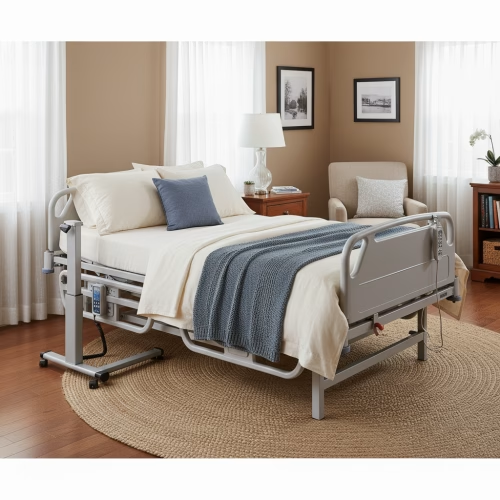
A specialist hospital bed at home can make a big difference during recovery. Adjustable height, tilting and easy-to-use controls help with transfers, wound care and sleeping in comfortable positions. These beds reduce strain on carers and allow family members to support recovery safely. Explore our different hospital bed options.

Wheelchairs for cancer recovery: manual and electric wheelchairs for comfort

Wheelchairs let people conserve energy and move around with dignity. Manual wheelchairs are often lightweight and easy to fold for short trips, while electric wheelchairs (powerchairs) give longer-range independence and reduce fatigue. When choosing, consider seat width, cushion support and ease of transfers.

For details on seat sizes, cushions and model options, visit our wheelchairs page or powerchairs page.

Mobility scooter for cancer survivors: go further, comfortably

If visiting friends, getting to appointments or shopping is important, a mobility scooter can extend how far someone can go without tiring. Look at range, portability, and whether the scooter fits transport and storage needs.

To compare range, portability and features, check out our mobility scooters collection.

Walking aids after cancer: rollators, walkers and walking sticks for safety

For shorter distances and improving balance, walking aids are invaluable. Rollators (walkers with wheels and a seat) are popular because they combine stability with the option to rest. An occupational therapist can help choose the right height and style.

Find the right walker for balance and comfort on our walking aids page.

Shower chair for cancer patient & commodes: safe, dignified bathing and toileting

Bathrooms can be high-risk areas. Shower chairs, commode chairs and combined shower-commodes allow safe, comfortable washing and toileting when standing is difficult. Many are height-adjustable, easy to clean, and designed to make carers’ tasks simpler.

For shower chairs, commodes and combined options, take a look at our shower chairs & commodes range.

Rise and recline chair for cancer patients: comfort that helps you stand

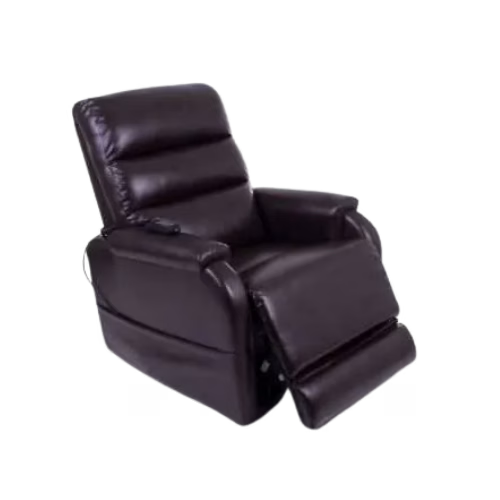
A rise & recline chair supports comfortable seating and gently lifts the user into a standing position. These chairs protect pressure points, reduce strain on hips and knees, and help people sit and stand with more independence.

See our rise & recline chairs to explore sizes, lift functions and fabric choices.

Small home changes that work with mobility equipment

Tiny additions often make a big difference: grab rails, non-slip mats, a bedside commode, good lighting and clear pathways. These simple home adaptations complement larger equipment and reduce fall risk.

Hire vs buy mobility equipment: why hiring from us often makes sense

Choosing whether to hire or buy mobility equipment depends on needs, budget and how long you’ll use the item. Hiring from us is a flexible, low-risk option worth considering:

  • Short-term or changing needs: If recovery is temporary or needs are likely to change, hiring avoids paying for equipment you only need briefly.

  • Try before you commit: Hiring lets you test models (beds, scooters, chairs) to find the best fit before deciding to buy.

  • Maintenance and support included: With Mobility Hire, routine servicing and breakdown support are taken care of, so you don’t  have to worry about repairs.

  • Lower upfront cost: Hiring keeps up-front costs down, which can be helpful while someone is concentrating on recovery.

  • Quick delivery and set-up: We can supply and set up items ready for use, so families can focus on comfort and care,  not logistics.

Practical checklist: choosing the right mobility equipment

  • Get an assessment from an occupational therapist or physiotherapist if possible.

  • Prioritise safety: correct transfer height, brakes, stable frames and anti-tip features.

  • Match seat width and weight capacity to the user.

  • Consider portability if you need to transport equipment.

  • Think about cushions and pressure relief for long periods of sitting.

Where to find support and further information

For practical guidance and information in the UK, Macmillan Cancer Support has helpful resources on home adaptations and equipment.


Posted on

Mobility equipment for amputees: a friendly guide to walkers, wheelchairs, bathroom aids and more

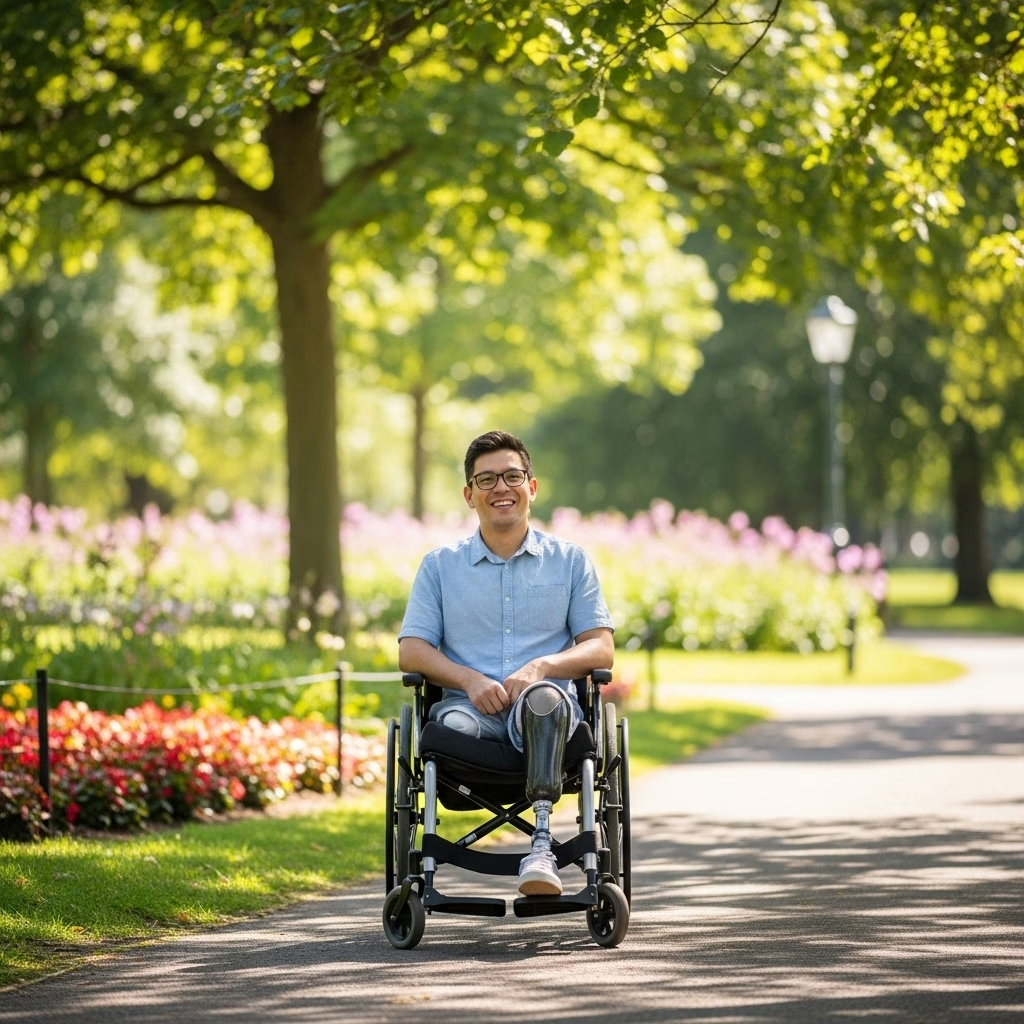
Adjusting to life after an amputation can feel overwhelming, but the right mobility equipment can make daily life easier, safer, and more comfortable. From walkers and wheelchairs to bathroom aids and hoists, these tools are here to support independence and confidence.

In this guide, we’ll explore the different types of equipment you might find useful, explain why they matter, and share some helpful information about VAT relief for hired items.

Why mobility equipment matters

Having the right support can make a big difference in everyday life. Mobility equipment helps you move around safely, perform daily activities, and enjoy more independence. Small changes, like a new walking aid or bathroom support, can have a big impact on your comfort and confidence.

Walkers, Rollators and Walking Sticks

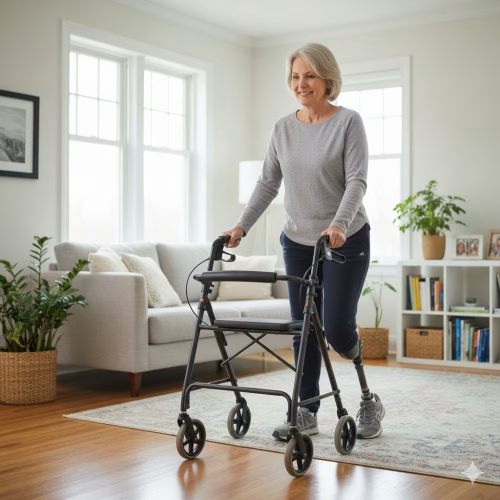
Walking aids can be a big help when regaining confidence after an amputation. Walking sticks are light and easy to use, ideal for short distances or giving a little extra balance. Walking frames offer more stability and are especially helpful in the early stages while learning to use a prosthesis. Rollators have wheels and a built-in seat, so you can move safely and take a rest whenever needed.

These aids are often the first step toward getting back on your feet, and a therapist can help you choose the right type and ensure it fits comfortably.

Manual Wheelchairs

Manual wheelchairs are versatile and provide freedom when walking isn’t possible or is tiring. There are lightweight versions that are easy to push, as well as sturdier chairs for everyday use. Some people use them temporarily during recovery, while others find them helpful for long-term support. Wheelchairs allow you to move around independently and safely while you focus on rehabilitation.


Powerchairs and Mobility Scooters

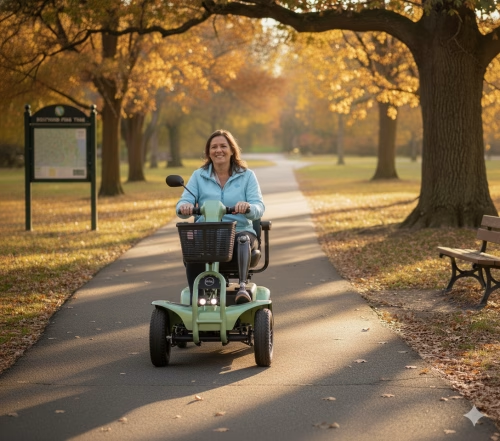
For extra independence, powered options like electric wheelchairs (powerchairs) or mobility scooters can be a great choice. These make longer distances easier and reduce physical effort. Powerchairs are ideal for indoor and outdoor use, while mobility scooters work well for trips outside the home. Choosing the right model depends on your lifestyle, environment, and personal comfort.

Bathroom Aids and Home Support

Daily routines like washing or using the toilet can feel safer with the right support. Helpful options include:

  • Raised toilet seats and commodes to make sitting and standing easier.

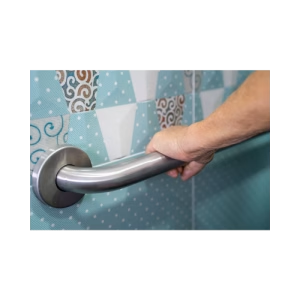
  • Grab rails for stability.

  • Non-slip mats or flooring to reduce the risk of slips.

  • Bath lifts or shower chairs for comfort and safety.

These small changes can make everyday tasks much more manageable and give you extra confidence around the home.


Transfers, Hoists and Seating

Moving between rooms or getting in and out of chairs can sometimes be challenging. Equipment like transfer hoists, riser-recliner chairs, and supportive cushions can make these movements safer and smoother. They’re especially helpful if you need assistance from a carer, making daily routines less stressful for everyone.

Prosthetic Accessories

If you use a prosthesis, small accessories can improve comfort and functionality. Items such as liners, socks, and cushions help the prosthesis fit better and make wearing it more comfortable throughout the day. Your prosthetist can recommend the best options for your needs.


Buying or Hiring Equipment

Sometimes it makes sense to buy equipment you’ll use long-term, like a personalised wheelchair or specialist seating. Hiring is a great solution for short-term needs or while you try out different options.

Good news: if you hire qualifying equipment as an amputee, it may be exempt from VAT, making it more affordable. Suppliers can guide you through what’s eligible and how the rules apply.

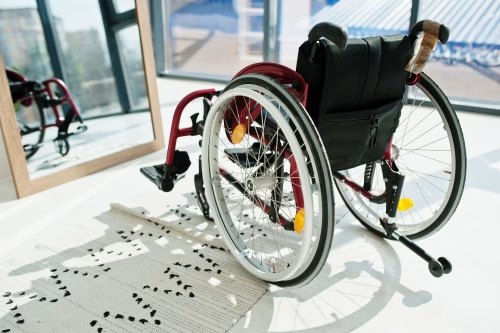
Empty wheelchair at home. Wheel chair indoor in mirror.

Extra Support and Advice

If you’d like more guidance or want to connect with others, these organisations are helpful:

They provide friendly advice, trusted information, and communities where you can share experiences.

How We Can Help

We offer a wide range of mobility equipment for hire or purchase,  from walkers and wheelchairs to bathroom aids and hoists. We can also explain VAT relief and help you choose what’s right for your situation.

Take a look at our full range of equipment on our mobility hire page.

Posted on

Mobility Equipment for People Living with Cerebral Palsy

Living with Cerebral Palsy can present a wide range of mobility challenges, but the right equipment can make a world of difference. Mobility aids are designed to promote independence, comfort, and safety, while also easing the daily tasks for carers. In this guide, we’ll look at the different types of mobility equipment available, from walkers and wheelchairs to hoists and beds, and how they can help improve quality of life.

Walkers and Walking Aids

Walkers and walking aids are often one of the first pieces of equipment people explore. They can provide vital support for children and adults who want to build strength and stability while moving around. Depending on the level of mobility, options include simple walking frames, rollators with wheels, and specialist gait trainers. These devices are designed to encourage independence, support posture, and help users stay active for longer.


Wheelchairs for Comfort and Freedom

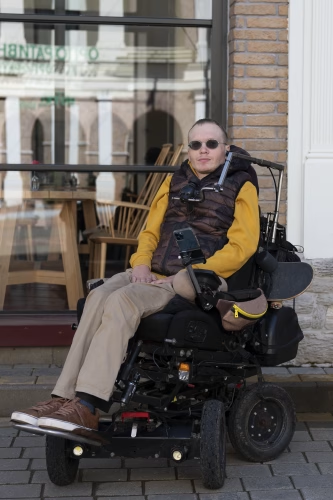
Wheelchairs are one of the most common mobility solutions for individuals with Cerebral Palsy. They range from lightweight manual wheelchairs to advanced powered chairs with custom seating. Manual wheelchairs are great for short distances or for users who have upper body strength. Powered wheelchairs, on the other hand, can be life-changing for those who want greater independence both indoors and outdoors.

Specialist seating systems can also be fitted to wheelchairs to provide extra comfort and support, helping to reduce strain and improve posture. Choosing the right wheelchair is always a personal decision, but with so many options, there is something to suit every lifestyle.

    Hoists and Transfer Equipment

For many families and carers, safe and comfortable transfers are essential. Hoists are designed to lift and move a person from one place to another, such as from a bed to a chair. They reduce the risk of injury for both the user and the carer. There are different types of hoists available, including ceiling-mounted systems, portable hoists, and stand-assist devices. Each option can make daily routines smoother, safer, and less physically demanding.


Specialist Beds and Mattresses

A good night’s sleep is vital for health and wellbeing. Specialist profiling beds and pressure-relieving mattresses are often recommended for people living with Cerebral Palsy. These beds allow users to adjust positions easily, which can reduce discomfort and support better posture. Pressure-relieving mattresses also help prevent pressure ulcers, ensuring greater comfort over long periods.


Hiring Equipment and VAT Exemption

Not everyone needs to buy mobility equipment outright. Hiring is a flexible and cost-effective option, especially if you only need equipment for a short period. When mobility equipment is hired for someone with Cerebral Palsy, it is exempt from VAT charges. This can make hiring an even more affordable solution for families and carers.


    Finding the Right Support

Choosing the right mobility equipment can feel overwhelming, but you don’t need to make these decisions alone. Talking to healthcare professionals, occupational therapists, or mobility specialists can help you find the equipment that best meets your needs.

For additional advice, guidance, and support, you can also visit Scope, a leading charity dedicated to people living with Cerebral Palsy and other disabilities.

Final Thoughts

The right mobility equipment can open doors to independence, comfort, and new opportunities. Whether it’s walkers for daily movement, wheelchairs for freedom, or hoists for safe transfers, there are solutions designed to support every stage of life with Cerebral Palsy. By exploring your options and seeking expert advice, you can make sure you or your loved one has the right tools to thrive.

Posted on

From Walkers to Wheelchairs: Mobility Equipment After a Stroke

Recovering from a stroke is a journey that often involves adapting to new challenges. Mobility equipment can play a vital role in helping someone regain independence, stay safe, and make daily life easier. From walking aids to specialist seating, the right support can make a big difference. This guide looks at the most common types of equipment and explains how they can help, as well as what you need to know about VAT relief when hiring equipment. For trusted medical guidance, the Stroke Association is a valuable source of information and support.

Regaining confidence with walking aids

One of the first steps in stroke recovery often involves walking practice. Canes and walking sticks provide light support for those who only need a little extra balance. For people who need more stability, frames such as walkers can offer a firmer base. Rollators, which are walkers with wheels and built-in seats, are especially helpful when longer distances are involved as they provide the chance to rest when needed. The choice of aid usually depends on guidance from a physiotherapist, who can recommend what suits a person’s strength and balance at different stages of recovery.

Wheelchairs and powerchairs for everyday mobility

If walking is difficult, a wheelchair can help someone move around safely and comfortably. Manual wheelchairs are often used in the short term or when the person still has good upper body strength. For those who need to travel longer distances or struggle with self-propelling, powerchairs can restore independence both indoors and outdoors. Choosing the right option often comes down to size, weight, terrain, and how easy the chair is to control. Working with a supplier and healthcare professional ensures the chair is properly fitted to the person’s needs.


Making the bathroom safer

The bathroom can be one of the trickiest areas after a stroke, but small changes can prevent accidents and increase confidence. Grab rails and shower seats help reduce the risk of slipping. Bath lifts and transfer benches allow safer access to the bath, while raised toilet seats and commodes make it easier to sit and stand without strain. These simple adaptations protect dignity and promote independence, while also easing the role of family members or carers.

Support with transfers and stairs

Moving safely from bed to chair or from one room to another can sometimes require extra help. Hoists, whether ceiling-mounted or mobile, allow safe transfers without the risk of injury to the individual or carer. If climbing stairs is no longer possible, stairlifts or platform lifts provide access to different levels of the home without the dangers of steep steps. In some cases, adaptations such as ramps or widened doorways can also improve access.

Comfort through specialist seating and beds

Comfort is just as important as mobility when recovering from a stroke. Riser-recline chairs are designed to make it easier to stand up from a seated position, while adjustable beds provide better support for rest and repositioning. Pressure-relieving mattresses are also beneficial for people who spend more time in bed, as they reduce the risk of pressure sores and improve overall comfort. These items are often overlooked but can have a huge impact on quality of life.


Small adaptations that make a big difference

Not all useful equipment is large or complex. Everyday items such as reachers, transfer boards, or simple assistive technology can make tasks much easier. Something as straightforward as a grabber tool helps reduce bending and stretching, while a voice-controlled assistant can help with reminders and communication. These small changes may seem minor, but they add up to a greater sense of independence.


    Hiring equipment and VAT relief

Hiring mobility equipment is a popular option during stroke recovery, particularly when needs may change over time. The good news is that any eligible equipment hired for someone who is disabled or recovering from a stroke is exempt from VAT. That means you will not pay VAT on hire costs for items such as wheelchairs, beds, or bathroom aids, as long as they are being used by the person in recovery.

To make life easier, we’ve gathered all of our hire products in one place, visit our main product page to see the full range.

Choosing equipment that makes life easier

Choosing the right mobility equipment after a stroke can feel overwhelming, but it does not need to be. With guidance from healthcare professionals and advice from a trusted supplier, the right mix of aids can make everyday life easier, safer, and more comfortable. To learn more about stroke recovery and additional support, visit the Stroke Association’s website.

Posted on

Mobility Equipment for People Living with Alzheimer’s: A Helpful Guide

Living with Alzheimer’s can bring daily challenges, especially when it comes to moving around safely and comfortably. The good news is that the right mobility equipment can make everyday life a little easier, not only for the person with Alzheimer’s but also for family members and carers. In this guide, we’ll explore some of the most helpful types of mobility aids, from rollators to bed hoists, and explain how VAT relief can help reduce costs when buying equipment.

To explore more guidance on equipment that can support someone living with Alzheimer’s, take a look at the helpful resources on the Alzheimer’s Society website.

Why Mobility Equipment Matters

As Alzheimer’s progresses, people may find walking, balance, and even simple movements more difficult. This can increase the risk of falls and reduce independence. By choosing the right equipment, you can help make daily routines safer, more comfortable, and more dignified. Small changes can make a big difference.

Rollators for Extra Support

Rollators, sometimes called walking frames with wheels, are great for those who are still mobile but need a bit of extra balance. They’re lightweight, easy to use, and many come with a seat for taking a break. For someone with Alzheimer’s, a rollator can encourage safe walking both indoors and outdoors while helping them stay active.


Wheelchairs for Comfort and Independence

When walking longer distances becomes too tiring or unsafe, a wheelchair can be a reassuring option. Manual wheelchairs are practical for shorter trips and can be pushed by a carer, while powered wheelchairs offer more independence. Choosing the right wheelchair depends on the individual’s lifestyle, comfort needs, and level of mobility.


Rise and Recline Chairs for Everyday Ease

Standing up from a regular chair can be challenging. A rise and recline chair gently lifts the user into a standing position, reducing the risk of falls and easing strain. These chairs also recline, making them perfect for resting or napping. For someone living with Alzheimer’s, they can bring a sense of comfort and security at home.


Bed Hoists for Safe Positioning

Bed hoists are designed to help people move more easily between lying, sitting, or standing positions. They can reduce strain on carers while making movements safer for the person using them. For someone with Alzheimer’s, bed hoists can provide reassurance, especially when getting in or out of bed becomes more difficult.


VAT Relief on Mobility Equipment

Many families choose to hire mobility equipment rather than buy it outright, especially if needs are changing. A key benefit of hiring is that it is exempt from VAT charges when being used by someone with Alzheimer’s. This can make it an even more affordable option and allow families to try different equipment before committing to a purchase. Always check with your supplier to confirm VAT exemption details.


Choosing the Right Equipment

Every person’s journey with Alzheimer’s is different, which means their needs will vary too. It’s always a good idea to talk with a healthcare professional or a mobility specialist to make sure you’re choosing equipment that truly supports the individual.

We also offer a wide range of mobility equipment for hire, giving you flexible options to suit short-term or changing needs, you can explore our full range on our website.

Final Thoughts

Mobility equipment can play a big part in making life with Alzheimer’s safer and more comfortable. From rollators that help with balance to bed hoists that support safe movement, these aids can bring reassurance to both the individual and their loved ones. And with VAT relief available on hiring/purchasing, it’s easier to find the right solution without added cost.

Posted on

Festive opening hours – what to expect over Christmas & New Year 🎄

As we creep further into December and closer to Christmas, here’s a quick guide to our opening hours so you can plan ahead. If you need deliveries or collections while we’re closed, we’re still available by special request, just get in touch.

📌 Important dates

  • Monday 22nd December & Tuesday 23rd December: Open 9am – 5pm
  • Christmas Eve (Wednesday 24th December): Open 9am – 3pm
  • Christmas Day & Boxing Day (25th & 26th December): Closed
  • Monday 29th December – Wednesday 31st December: Open 9am – 5pm
  • New Year’s Day (1st January): Closed
  • Friday 2nd January: Back open as normal 9am – 5pm

Want to contact us when we’re closed? Use the Out of Office Contact Form on our website and we’ll reply as soon as possible.

📌 Important delivery dates

Courier deliveries

  • Orders placed on Tuesday 23rd December, earliest available delivery will be on Monday 29th December
  • Orders placed on Wednesday 24th December to Monday 29th December, earliest available delivery will be on Tuesday 30th December
  • Orders placed on Tuesday 30th December, earliest available delivery will be on Friday 2nd January
  • Orders placed on Wednesday 31st December to Friday 2nd January, earliest available delivery will be on Monday 5th January

Please note that there are no Courier collections available between Tuesday 23rd December until Friday 2nd January. 

Our van deliveries

  • Deliveries as normal on Monday 22nd December – Wednesday 24th December
  • Deliveries can be available by special request on Friday 26th December, Saturday 27th December & Sunday 28th December (Bank holiday/weekend rates apply)
  • Deliveries as normal on Monday 29th December, Tuesday 30th December & Wednesday 31st December
  • Deliveries can be available by special request on Thursday 1st January (Bank holiday rate applies)
  • Deliveries as normal on Friday 2nd January

If you need deliveries or collections during the festive break, please contact us ahead of time, we’re happy to arrange these by special request. Wishing you a peaceful and safe holiday season from all of us!

Posted on

Electric vs Manual Hospital Beds

bariatric profiling hospital bed room

When caring for a loved one at home, choosing the right hospital bed is crucial. The decision between an electric hospital bed and a manual hospital bed can significantly impact comfort, convenience, and overall care. In this guide, we explore the benefits of both options to help you make the best choice. Find out more about hospital bed at home.


bariatric profiling hospital bed room


Close up image of rota pro rotating bed handset being hand-held


saturn low rotating chair bed rotating


Understanding Electric Hospital Beds

An electric hospital bed is powered by a motor, allowing users or carers to adjust the height, head, and foot sections with ease. These beds enhance patient comfort and reduce strain on caregivers.

Advantages of Electric Hospital Beds

  • Ease of Use: Adjustments can be made with minimal effort, ideal for those with limited mobility.
  • Better Comfort: Customisable positions improve sleep quality and reduce bedsores.
  • Caregiver Support: Reduces physical strain for carers, preventing back injuries.
  • Increased Independence: Users can adjust their position without assistance.

Disadvantages of Electric Hospital Beds

  • Higher Cost: More expensive due to advanced features.
  • Requires Power: Needs a power source, which may be inconvenient in case of a power outage.
  • Heavier Design: Can be harder to move compared to manual models.

Understanding Manual Hospital Beds

A manual hospital bed requires physical effort to adjust its height and positioning using cranks. While more affordable, it may not be suitable for every situation.

Advantages of Manual Hospital Beds

  • Lower Cost: Budget-friendly compared to electric models.
  • No Electricity Needed: Works even during power cuts.
  • Durability: Fewer mechanical parts mean less chance of failure.

Disadvantages of Manual Hospital Beds

  • Requires Effort: Adjusting the bed manually can be difficult, especially for carers.
  • Limited Adjustability: Lacks the advanced positioning of electric beds.
  • Less Comfort: Not as customisable for patient needs.

Which Bed is Best for Homecare?

The choice between an electric or manual hospital bed depends on the user’s needs and the caregiver’s abilities. Consider the following:

  • If the patient has limited mobility, an electric bed offers independence.
  • If carers have physical limitations, an electric bed reduces strain.
  • If budget is a concern, a manual bed is a more affordable solution.
  • If power cuts are frequent, a manual bed avoids disruptions.

At Mobility Hire, we offer hospital bed rentals to suit every need. Whether you require an electric or manual bed, we provide short-term and long-term hire solutions to make homecare easier. Explore our hospital bed hire options today.

Choosing between an electric hospital bed and a manual hospital bed for home depends on comfort, convenience, and budget. An electric hospital bed rental may be the best option for those needing frequent adjustments, while a manual bed suits those with basic needs.

At Mobility Hire, we make homecare solutions simple. Browse our hospital bed hire options to find the perfect fit for your needs. Contact us today to learn more about our mobility equipment hire services.